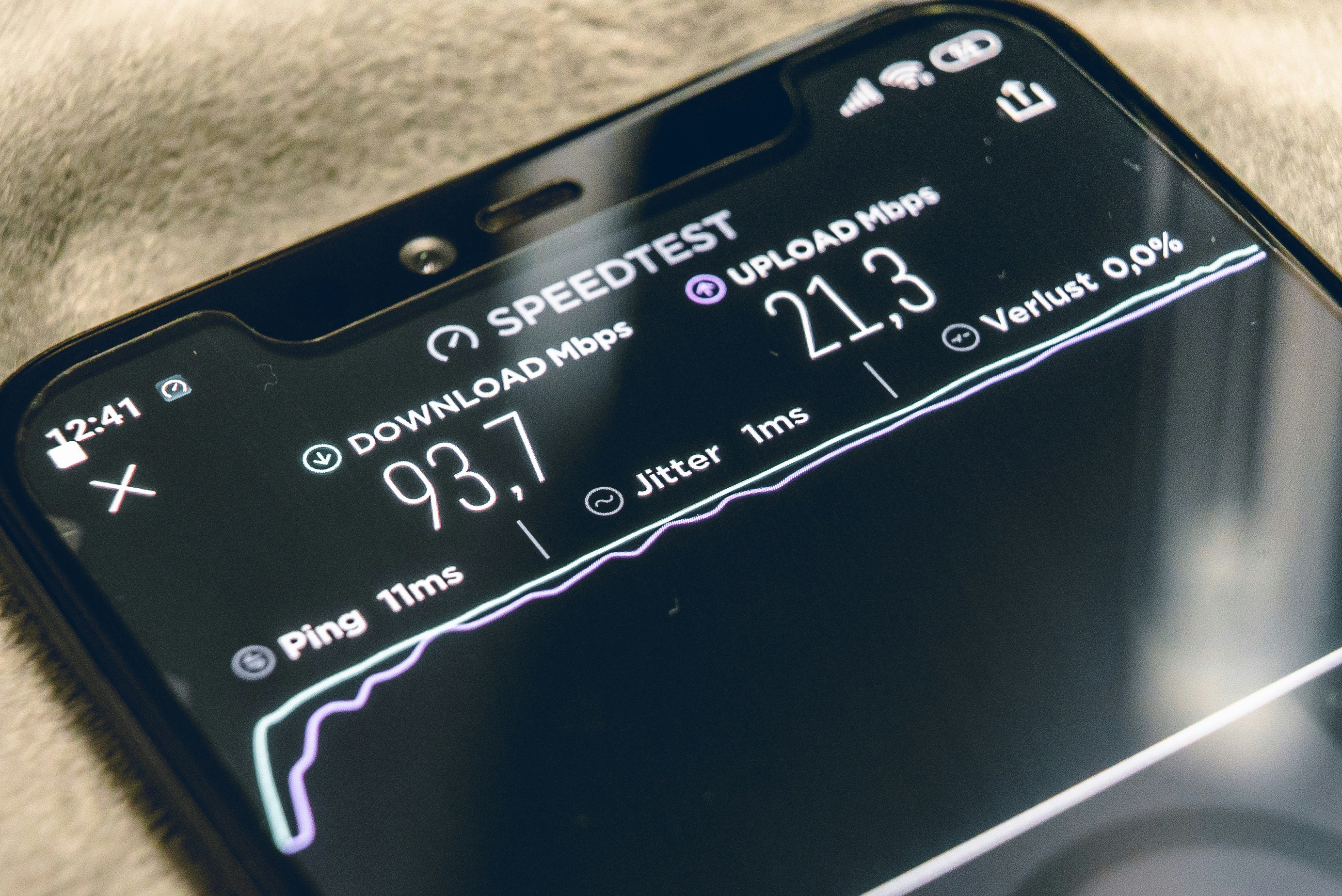
UK mobile broadband speed is the 3rd fastest among similarly sized countries, according to the French speed testing site nPerf.
The study was conducted based on speed checks made between January and April this year. nPerf compared 20 countries of a similar size to Poland including the UK, Vietnam, Italy, Spain, Germany, Ukraine, Kenya, Thailand and Senegal.
Overall, the UK ranked 3rd with an average mobile broadband speed of 105.8 Mbps, just behind Poland (109.9 Mbps) and Germany (106.7 Mbps).
At the other end of the spectrum, the three countries with the lowest average mobile broadband speed were Kenya (21.2 Mbps), Uzbekistan (18.5 Mbps) and Paraguay (16.8 Mbps).
How does UK mobile broadband speed rank globally?
nPerf’s study compared countries of a similar size, but where does the UK rank overall in the world?
At the end of 2025, ISPreview compared data from the year from speedtest.net operator Ookla to get a broader picture. Overall, UK mobile broadband speed ranked 59th in 2025, down slightly from 53rd last year. However, while the UK’s rank fell the average mobile broadband speed did improve slightly, from 94.52 Mbps in 2024 to 106.84 Mbps in 2025.
Meanwhile, Ookla’s own ranking puts the UK in 57th place out of 195 countries for mobile broadband speeds across the world. That’s a slight improvement on last year’s Ookla ranking of 61st place.
The world’s fastest mobile broadband is centred on West Asia, with the top three countries for mobile internet speeds in 2026 being the United Arab Emirates (647.28 Mbps), Qatar (561.91 Mbps) and Kuwait (365.69 Mbps).
Is UK mobile broadband speed getting better?
Yes - the average UK mobile broadband speed is increasing year on year. One major reason is the increased availability of 5GSA (standalone) networks. These dedicated 5G networks use purpose built hardware, rather than upgraded versions of the existing 4G infrastructure. This allows users to access a higher speed, more reliable network - ideal for working from home and internet power users.
With the rollout of 6G networks expected around 2030, we can expect to see a sharp increase in average mobile broadband speeds as these networks become available. Experimental 6G networks have reached maximum speeds of 938 Gbps, and 6G mobile broadband is expected to be able to offer consumers day-to-day speeds of more than 50 Gbps.
The future looks bright for UK mobile broadband speeds, with providers dedicated to investing in constantly improving mobile broadband infrastructure - and the customer speed boosts that come with it. O2, for example, are in the middle of a £700 million ‘Mobile Transformation Plan’ designed to improve network coverage, reliability and speed - and prepare for the rollout of 6G.
With more and more people relying on mobile devices for daily tasks, and more households using 5G mobile broadband instead of traditional wired broadband, the constant investment and upgrades is a sign that UK mobile broadband will remain competitive on the global stage for many years to come.