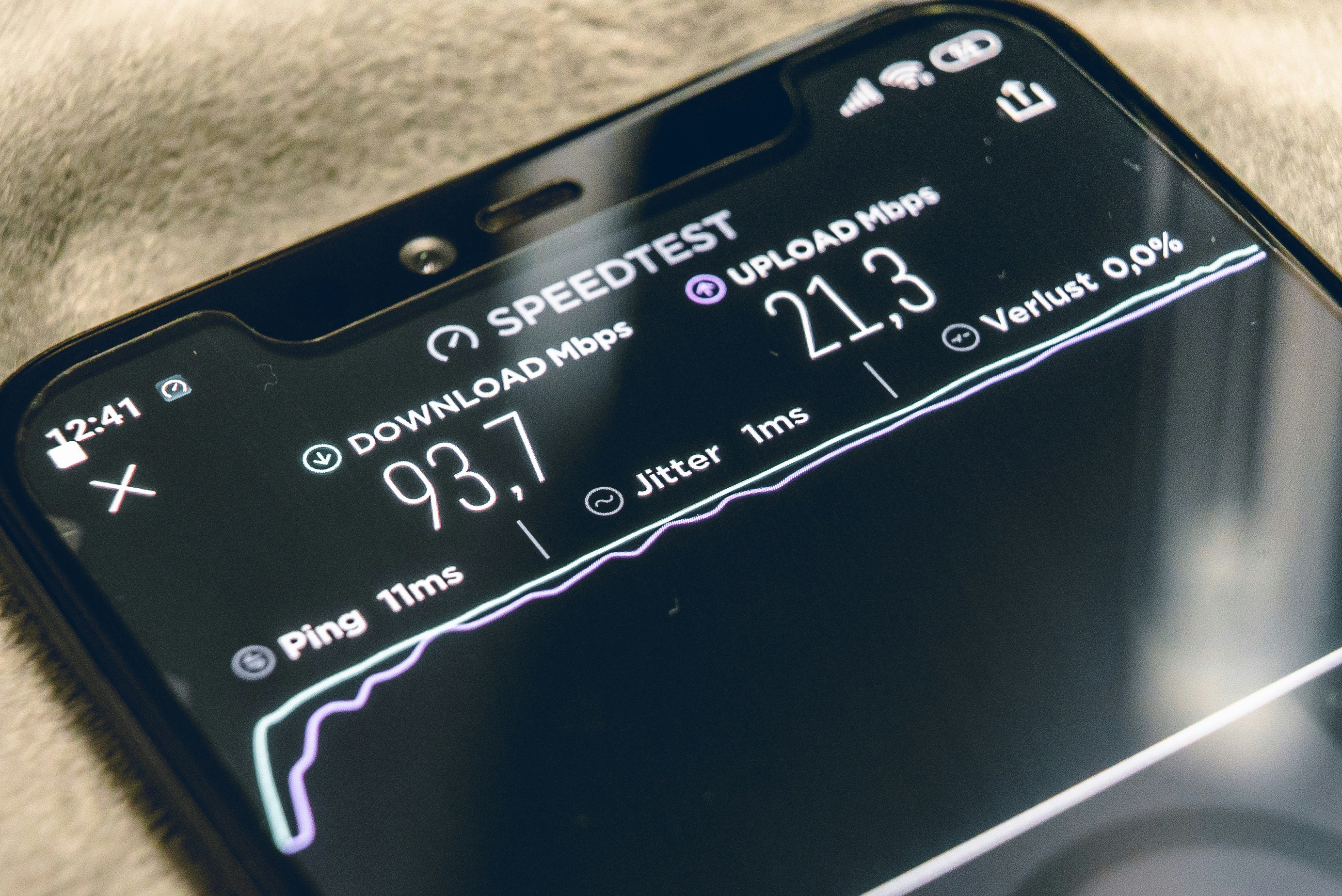
Have you ever been checking your mobile device connection and asked yourself: What is 4G+?
The network indicator on your phone, tablet or mobile broadband router shows what kind of mobile signal you’re getting. Alongside the familiar 4G and 5G, sometimes your device will show your connection as ‘4G+’ or '4G Plus'.
What does that mean? Is 4G+ the same as 5G? Here’s everything you need to know about 4G+ mobile internet, and what it means for your device.
What is 4G+?
4G+ is a marketing term that describes an advanced version of 4G mobile signals. 4G mobile internet standards are also known as LTE - Long Term Evolution - and 4G+ is LTE-A - Long Term Evolution Advanced.
The mobile industry uses these terms to refer to benchmarks and industry standards. 4G refers to one generation of technology, with particular expected speeds and performance. As that technology was upgraded, mobile networks began labelling certain devices and connections as 4G+, indicating a higher level of performance.
4G+ mobile connections use the existing 4G infrastructure, but software and hardware advancements in your handset or other devices let them reach higher speeds on the same network.
The difference between 4G and 4G+
The main differences between 4G and 4G+ are in network speed and reliability.
Higher Speed
Standard 4G connections offer speeds of around 20 Mbps, whereas 4G+ connections can offer real world speeds of around 90 Mbps and theoretical maximum speeds of 300 Mbps.
Network Efficiency
4G+ is optimised for modern usage, including efficiency in crowded areas where many users are accessing the same network and for uses like streaming HD video and gaming online.
Device Compatibility
Not all devices can make use of the upgraded 4G+ technology. Look for phones and mobile broadband routers advertised as being 4G+ compatible (like our 4G+ mobile broadband routers) to make the most of the tech.
Is 4G+ the same as 5G?
No - despite the improvements, 4G+ is not the same as 5G. 4G+ still uses the older 4G mobile infrastructure, building on it to offer improved performance. 5G, on the other hand, is a new standard for mobile technology, and uses new hardware to offer significantly increased performance.
5G offers even higher speeds than 4G+, with average UK speeds of 150-200 Mbps and maximum speeds of 900 Mbps. 5G connections are also much lower latency and offer improved network stability, allowing many devices to be connected to the same network - perfect for busy homes.
However, in areas where 5G signal is not yet available, 4G+ bridges the gap in offering a faster and more powerful mobile option.
Can I get 5G+ mobile signal?
Confusingly, the answer is both yes and no. There is an improved version of 5G being rolled out across the UK - but it’s not called 5G+. Instead, this new version of 5G has been branded as 5GSA - 5G Stand Alone.
The name refers to the fact that this version of 5G uses hardware that is specifically built for 5G, not an upgraded hybrid of 4G and 5G technologies.
You can find out more about 5GSA here, including which providers are offering the upgraded connections.